Understanding modern communication isn’t just about decoding slang like “LOL” or “BRB.”
Sometimes, real English words like “deference” pop up in chats, emails, or social media and knowing what they mean can instantly level up your communication skills.
Whether you’re texting, commenting online, or writing professionally, “deference meaning” is something worth understanding.
Why? Because it reflects tone, respect, and social awareness things that matter more than ever in 2026’s digital conversations.
In this complete guide (Updated for 2026), you’ll learn exactly what deference means, how to use it naturally, and how to avoid common mistakes plus real-life examples that make it easy to remember.
What Does “Deference” Mean? (Definition & Origin)
Simple Definition of Deference
Deference means showing respect, politeness, or submission to someone else’s opinions, authority, or wishes.
👉 In simple words:
Deference = Respect + Humility toward someone
Quick Example:
- “Out of deference to my teacher, I stayed quiet.”
👉 Meaning: You stayed quiet to show respect.
Origin of the Word
The word deference comes from Latin:
- “deferre” → meaning to carry away or yield
Over time, it evolved into the modern meaning:
👉 Yielding to someone out of respect
Is “Deference” a Slang or Formal Word?
Unlike internet slang, deference is a formal English word. However, it’s increasingly used in:
- Professional emails
- Online debates
- Social media captions
- Polite texting
So while it’s not slang, it’s definitely part of modern communication culture.
How to Use “Deference” in Texts or Chat
Even though “deference” sounds formal, you can use it in casual or semi-formal communication especially when you want to sound respectful or thoughtful.
Common Ways to Use Deference
1. Showing Respect in Conversations
- “I’ll go with your idea out of deference.”
- “Out of deference to you, I won’t argue.”
2. In Online Discussions
- “In deference to others’ opinions, let’s keep this civil.”
3. In Text Messages (Modern Style)
- “I’ll step back out of deference to your decision 👍”
- “Out of deference, I won’t push this further.”
Pro Tip (2026 Usage Trend)
People now mix formal words like “deference” with emojis to soften tone:
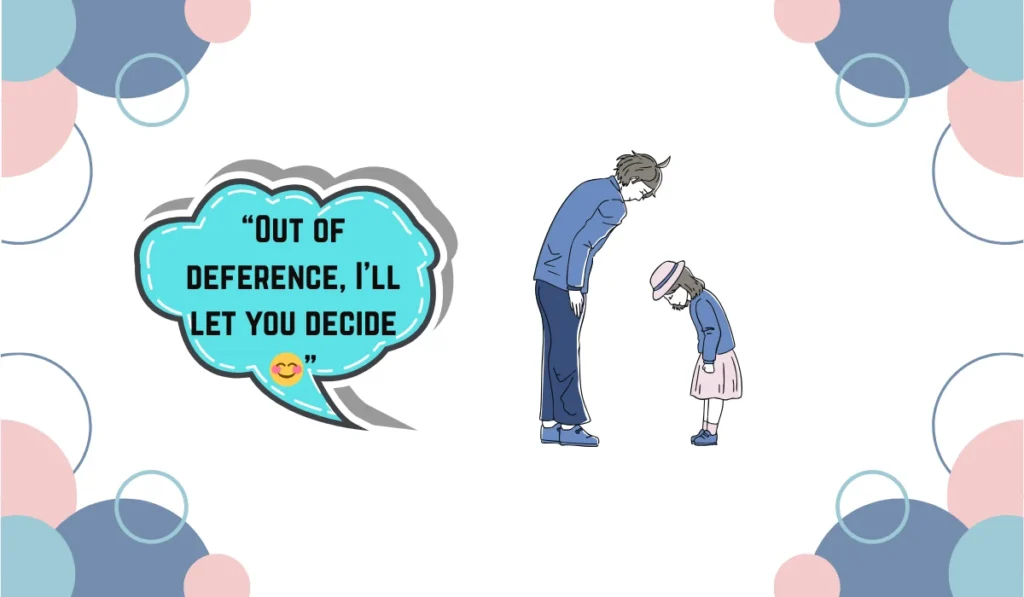
- “Out of deference, I’ll let you decide 😊”
This blend makes you sound:
✔ Smart
✔ Polite
✔ Emotionally aware
Examples of “Deference” in Conversations
Let’s make it real with relatable scenarios 👇
1. Friend Chat
A: “I think we should watch a movie tonight.”
B: “Sure, I’ll go with your choice out of deference 😄”
👉 Meaning: Respecting your friend’s preference.
2. Workplace Chat
Manager: “Let’s follow this plan.”
Employee: “Understood. Out of deference to your experience, I agree.”
👉 Meaning: Respecting authority.
3. Social Media Comment
- “Out of deference to different opinions, I won’t debate this further.”
👉 Meaning: Staying respectful in a discussion.
4. Family Conversation
- “Out of deference to my parents, I accepted their decision.”
5. Funny/Relatable Example
- “Out of deference to my mom, I said I liked the food 😂”
👉 Everyone can relate to this one!
Common Mistakes or Misunderstandings
Even though deference meaning is simple, people often misuse it.
❌ Mistake #1: Confusing Deference with Difference
- Deference = Respect
- Difference = Not the same
👉 Wrong: “I see your deference”
👉 Correct: “I see your difference”
❌ Mistake #2: Using It Too Casually
It’s not always suitable in super casual chats:
- ❌ “Deference bro 😂”
- ✔ Better: “Respect bro”
❌ Mistake #3: Overusing It in Arguments
Using it incorrectly can sound sarcastic:
- “Oh yeah, out of deference to your genius…” 😅
👉 This can come off as passive-aggressive.
❌ Mistake #4: Thinking It Means Fear
Deference is not fear. It’s:
✔ Respect
✔ Politeness
✔ Consideration
Related Slangs or Abbreviations
Even though deference isn’t slang, it connects with many modern expressions.
Common Alternatives in Chat
| Word/Slang | Meaning |
|---|---|
| Respect | Direct and casual version |
| Props | Giving credit |
| Salute 🫡 | Showing admiration |
| Mad respect | Strong appreciation |
| Fair enough | Accepting someone’s view |
| I’ll defer | Modern shorthand version |
Text-Friendly Versions of Deference
Instead of typing “deference,” people often say:
- “I’ll defer to you”
- “Your call 👍”
- “You decide”
👉 These are modern conversational equivalents.
Internal Linking Suggestions (SEO Boost)
You can link this article to:
- “Respect meaning in chat”
- “What does ‘fair enough’ mean?”
- “Common formal words used in texting”
- “Difference between respect and obedience”
When Should You Use Deference? (Practical Guide)
Understanding when to use deference is just as important as knowing what it means.
✅ Best Situations
Use it when:
- Talking to elders or seniors
- In professional emails
- During respectful disagreements
- When avoiding conflict
- In thoughtful social media posts
❌ Avoid Using It When
- Chatting casually with close friends
- In memes or jokes (unless ironic)
- When you want to sound playful
Quick Rule:
👉 Use deference when respect matters
👉 Use slang when vibe matters
Why “Deference” Matters in 2026 Communication
In today’s online world:
- Conversations happen fast
- Misunderstandings happen faster
Using words like deference helps:
✔ Show emotional intelligence
✔ Avoid conflicts
✔ Build respect online
Trend Insight (2026)
There’s a growing trend of mixing:
- Formal vocabulary
- Casual tone
👉 This creates “smart casual communication” and deference fits perfectly.
FAQs
1. What does deference mean in simple words?
Deference means showing respect or yielding to someone’s opinion or authority.
2. Is deference used in texting?
Yes, especially in polite or semi-formal chats, though simpler alternatives are more common.
3. What is an example of deference?
“Out of deference to my boss, I followed the plan.”
4. Is deference positive or negative?
It’s generally positive, but too much can seem like lack of confidence.
5. What is the difference between respect and deference?
- Respect = Admiration
- Deference = Acting on that respect (yielding or agreeing)
6. Can deference be used sarcastically?
Yes, but it may sound passive-aggressive depending on tone.
7. What is a synonym for deference?
- Respect
- Regard
- Submission
- Courtesy
8. Is deference formal English?
Yes, but it’s increasingly used in modern digital communication.
Conclusion
Understanding deference meaning isn’t just about vocabulary it’s about communication style.
In a world where tone can easily be misunderstood, knowing when and how to show respect makes a big difference.
Whether you’re texting a friend, replying to a comment, or writing a professional message, deference helps you sound thoughtful, respectful, and emotionally intelligent.
As communication continues evolving in 2026, blending formal clarity with casual tone is becoming the new norm and “deference” fits right into that sweet spot.
💬 Now it’s your turn!
What’s your favorite text abbreviation or word you use to show respect? Share it in the comments!