In today’s fast-paced digital world, communication has evolved beyond long conversations into quick texts, emojis, and short phrases.
But not everything meaningful can be reduced to slang.
Some phrases like “moral support” still carry deep emotional weight, even in casual chats.
Whether you’re scrolling through social media, chatting on WhatsApp, or replying to a friend’s late-night message, understanding the moral support meaning can help you respond with empathy and confidence.
Updated for 2026, this guide breaks down everything you need to know from definition and usage to real-life examples and common mistakes.
What Does “Moral Support” Mean? (Definition & Origin)
Simple Definition
Moral support refers to encouragement, emotional backing, or reassurance given to someone, especially during difficult or stressful situations.
👉 In simple terms:
It means being there for someone emotionally, even if you can’t physically help.
Origin of the Term
The phrase comes from the word “moral,” which relates to emotions, values, and mental strength not just right or wrong behavior.
Historically, it was used in serious contexts like:
- War (boosting soldiers’ morale)
- Psychology (emotional well-being)
- Personal relationships
Today, it’s widely used in:
- Text messages
- Social media posts
- Online communities
- Everyday conversations
Why “Moral Support” Matters in Texting Culture
In modern chat culture, not every situation requires advice or solutions. Sometimes, people just want:
- Someone to listen
- Someone to say “you got this”
- Someone who understands
That’s where moral support comes in.
💬 Example:
“I have my exam tomorrow and I’m so nervous.”
“Don’t worry, I’m here for moral support. You’ll do great!”
Even in a short message, this phrase delivers comfort, reassurance, and positivity.
How to Use “Moral Support” in Texts or Chat
Using moral support correctly is simple—but context matters.
1. When Someone Is Stressed or Anxious
Offer encouragement without overcomplicating things.
Examples:
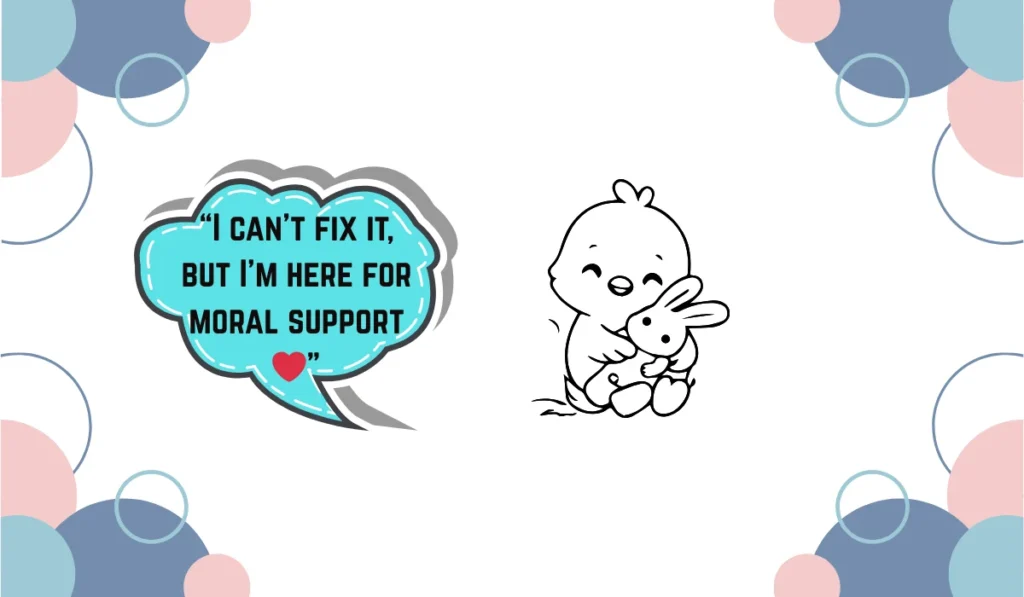
- “I can’t fix it, but I’m here for moral support ❤️”
- “Sending you moral support for your big day!”
2. During Important Life Events
People often need emotional backing during:
- Exams
- Job interviews
- Breakups
- Health issues
Examples:
- “Good luck with your interview! I’m your moral support team!”
- “You’re not alone I’m here for moral support always.”
3. In a Light or Funny Way
Sometimes it’s used humorously when someone can’t actually help.
😂 Example:
“I can’t help you move your furniture, but I’ll bring snacks for moral support!”
4. On Social Media
You’ll often see it in captions or comments:
- “Tag your moral support friend 💯”
- “We all need moral support sometimes 🙌”
Examples of “Moral Support” in Conversations
Let’s break down some real-life and relatable chat scenarios.
Example 1: Exam Stress
Friend: “I think I’m going to fail 😭”
You: “No way! I’m here for moral support you’ve got this!”
Example 2: Gym Motivation
Friend: “I don’t feel like going to the gym today.”
You: “Go anyway! I’m your virtual moral support 💪”
Example 3: Breakup Situation
Friend: “I miss them so much…”
You: “I’m here for you. Sending moral support your way ❤️”
Example 4: Funny Scenario
Friend: “I have to clean my room 😩”
You: “I’ll sit and watch… moral support only 😂”
Common Mistakes or Misunderstandings
Even though the phrase is simple, people sometimes misuse it.
❌ Mistake 1: Confusing It With Physical Help
- Moral support ≠ doing the task for someone
✔️ Correct:
“I can’t help you study, but I’ll give moral support.”
❌ Mistake 2: Using It in Serious Situations Without Action
In critical situations, moral support alone may not be enough.
👉 Example:
- If someone is in real danger, they need actual help, not just encouragement.
❌ Mistake 3: Overusing It Casually
Using it too often in jokes can reduce its emotional impact.
Related Slangs or Abbreviations
While moral support isn’t an abbreviation itself, it connects with many modern texting expressions.
🔹 Common Related Terms:
- ILY – I Love You
- GL – Good Luck
- You got this – Encouragement phrase
- Stay strong – Emotional support
- Sending vibes – Positive energy
🔹 Emojis That Represent Moral Support:
- ❤️ (Love & care)
- 💪 (Strength)
- 🙌 (Support & encouragement)
- 🤗 (Hug)
When Should You Use “Moral Support”? (Practical Guide)
Here’s a quick breakdown of best situations to use it:
✅ Use It When:
- Someone is nervous or anxious
- A friend needs emotional reassurance
- You want to encourage someone
- You can’t physically help but want to support
❌ Avoid It When:
- The situation requires urgent action
- You’re expected to give practical help
- It sounds dismissive or insincere
Real-Life Insight: Why People Value Moral Support
In 2026, digital communication has made people more connected—but also more emotionally distant at times.
That’s why simple supportive phrases matter more than ever.
From personal experience and online trends:
- People often don’t want solutions they want understanding
- A short supportive message can reduce stress instantly
- Emotional validation is key in friendships
👉 Even a simple “I’m here for moral support” can:
- Boost confidence
- Reduce anxiety
- Strengthen relationships
Internal Linking Suggestions (For SEO)
If you’re building a blog, link this article to:
- “What Does ‘ILY’ Mean in Text?”
- “Meaning of ‘FR’ in Chat”
- “What Does ‘IMO’ Mean?”
- “Top Internet Slang Words in 2026”
FAQs
1. What is the meaning of moral support in simple words?
It means encouraging someone emotionally without physically helping them.
2. Is moral support the same as helping someone?
No. Moral support is emotional encouragement, not practical help.
3. Can you use “moral support” in texting?
Yes! It’s commonly used in chats, social media, and messages.
4. Is moral support serious or casual?
It can be both:
- Serious in emotional situations
- Funny in casual conversations
5. What are examples of moral support messages?
- “I’m here for moral support ❤️”
- “You’ve got this!”
- “Sending positive vibes your way!”
6. Why is moral support important?
It helps people feel less alone, more confident, and emotionally supported.
7. Can moral support be given online?
Absolutely. In fact, most moral support today happens through:
- Text messages
- Social media
- Online communities
8. Is “moral support” a slang term?
Not exactly. It’s a standard phrase, but widely used in modern chat culture.
Conclusion
Understanding the moral support meaning is more than just learning a phrase it’s about improving how you connect with others in a digital world.
In texting and online conversations, small words can carry big emotions.
Whether you’re cheering up a friend, calming someone’s anxiety, or just being present, offering moral support shows empathy and care.
Remember:
- You don’t always need the perfect solution
- Sometimes, just being there is enough
- A simple message can make someone’s day better
So next time someone needs encouragement, don’t overthink it just say:
👉 “I’m here for moral support.”
💬 Call to Action:
What’s your favorite text abbreviation or supportive phrase? Share it in the comments and let’s grow this slang guide together!