Understanding internet slang is no longer optional it’s essential.
Whether you’re scrolling through social media, chatting with friends, or decoding memes, slang terms like “jive” pop up more often than you might expect.
But here’s the catch:
“jive” doesn’t always mean what you think it does.
In this updated for 2026 guide, we’ll break down the true jive meaning, how it’s used in texting and online conversations, and how you can confidently use it yourself without sounding out of place.
What Does “Jive” Mean? (Definition & Origin)
Basic Definition of Jive
The word “jive” has multiple meanings depending on the context. In modern texting and slang, it usually means:
- To agree or align with something
- To vibe or resonate with a feeling or idea
- Sometimes, to refer to nonsense or exaggeration (less common today)
👉 Simple meaning:
“Jive” = something that matches, fits, or feels right
Origin of the Word “Jive”
The term “jive” actually goes way back long before texting existed.
- 1920s–1940s: It originated in African American jazz culture
- Initially meant:
- Jazz slang
- Talking nonsense or exaggerated speech
- Over time, it evolved into:
- “Jive with” = to agree or be in sync
💡 Example evolution:
- Old meaning: “That’s just jive talk” (nonsense)
- Modern meaning: “That doesn’t jive with me” (doesn’t match or feel right)
Modern Internet Meaning (2026)
In today’s digital conversations, “jive” is mostly used casually:
- “That idea doesn’t jive with me” → I don’t agree
- “Your vibe totally jives with mine” → We match / we connect
It’s subtle, expressive, and slightly more mature than Gen Z slang like “vibe” or “slay.”
How to Use “Jive” in Texts or Chat
Using “jive” correctly is all about context. It’s not as loud or trendy as some slang—it’s more of a smooth, conversational word.
Common Ways to Use “Jive”
1. To Show Agreement or Alignment
Use it when something makes sense to you.
Examples:
- “Yeah, that explanation jives with what I heard.”
- “Your story doesn’t jive with the timeline.”
2. To Describe Compatibility (Vibes Matching)
Examples:
- “We really jive when we work together.”
- “Their personalities just don’t jive.”
3. To Question Something (Doubt)
Examples:
- “Something about this doesn’t jive.”
- “That excuse isn’t jiving with me.”
Where You’ll See “Jive” Online
You’ll commonly find this word used on:
- Text messages (WhatsApp, Messenger)
- Social media captions (Instagram, X, TikTok)
- Reddit discussions
- Professional chats (Slack, emails)
👉 It’s one of the few slang terms that works in both casual and semi-professional settings.
Examples of “Jive” in Conversations
Let’s make this super clear with real-life style examples:
Casual Chat Example
Friend 1:
“I feel like he’s hiding something.”
Friend 2:
“Yeah… his story doesn’t jive.”
Work Chat Example
Colleague:
“These numbers don’t match last quarter.”
You:
“Yeah, they don’t really jive with the report.”
Funny Scenario
You:
“I said I’d start dieting Monday.”
Friend:
“But you just ordered pizza.”
You:
“Okay yeah… that doesn’t jive 😂”
Social Media Example (2026 Style)
- “If your energy doesn’t jive with mine, I’m out ✌️”
- “This playlist really jives with my mood today 🎧”
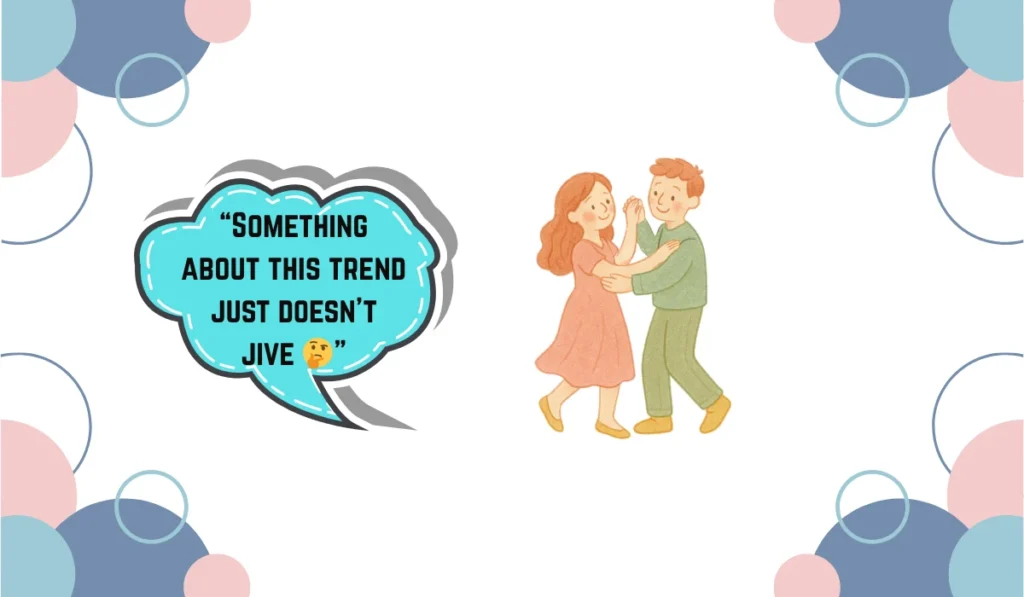
- “Something about this trend just doesn’t jive 🤔”
Common Mistakes or Misunderstandings
Even though “jive” is simple, people often misuse it.
❌ Mistake 1: Confusing “Jive” with “Jibe”
This is the most common confusion.
- Jive = slang, vibe, agreement
- Jibe = technically means “to agree” (formal English)
👉 In modern usage:
- People often use “jive” instead of “jibe”
- And honestly? It’s widely accepted in casual writing
❌ Mistake 2: Using It as a Trendy Slang Word
“Jive” is NOT like:
- “Rizz”
- “Slay”
- “No cap”
👉 It’s more low-key and mature, not flashy Gen Z slang.
❌ Mistake 3: Using It in the Wrong Tone
Avoid using it in overly dramatic contexts:
- ❌ “This party is so jive!”
- ✅ “The vibe here really jives with me”
Related Slangs or Abbreviations
If you’re learning “jive meaning,” you’ll probably want to understand similar expressions.
Synonyms & Similar Slang
- Vibe / Vibing → emotional connection
- Click → instant compatibility
- Match → alignment
- Resonate → deeper agreement
Modern Slang Alternatives (2026)
- “That checks out”
- “I’m not feeling it”
- “We’re on the same wavelength”
- “It’s not adding up”
Text Abbreviations Related to Agreement
- IMO → In My Opinion
- TBH → To Be Honest
- FR → For Real
- IKR → I Know, Right?
Internal Linking Suggestions (For SEO)
You can link this article to:
- “What Does FR Mean in Text?”
- “IKR Meaning Explained”
- “No Cap Meaning in Chat”
- “Vibe Meaning in Slang”
Why “Jive” Is Still Relevant in 2026
You might wonder: Isn’t this an old word?
Surprisingly, “jive” is making a quiet comeback.
Why People Still Use It
- It sounds natural and not forced
- Works in both formal and casual chats
- Feels more authentic than trendy slang
- Often used by:
- Millennials
- Professionals
- Writers & communicators
👉 It’s the perfect middle ground between slang and standard English.
When You Should (and Shouldn’t) Use “Jive”
✅ Use It When:
- You want to sound natural and thoughtful
- You’re expressing agreement or doubt
- You’re in a casual or semi-formal setting
❌ Avoid It When:
- You’re trying to sound super trendy
- You’re writing very formal academic content
- You don’t fully understand the context
Quick Usage Cheat Sheet
- “Doesn’t jive” = doesn’t make sense
- “Jives with me” = I agree
- “We jive” = we connect well
FAQs
1. What does “jive” mean in texting?
It means something matches, agrees, or feels right in a conversation.
2. Is “jive” positive or negative?
It can be both:
- Positive → “We jive well”
- Negative → “That doesn’t jive”
3. Is “jive” slang or proper English?
It’s technically slang, but widely accepted in casual and semi-formal English.
4. What’s the difference between “jive” and “vibe”?
- Jive → agreement or alignment
- Vibe → emotional feeling or atmosphere
5. Is “jive” still used in 2026?
Yes! It’s less trendy but more timeless, especially in natural conversation.
6. Can I use “jive” in professional communication?
Yes, in informal work chats or emails, but avoid in strict formal writing.
7. Why do people say “that doesn’t jive”?
It means something doesn’t make sense or doesn’t match expectations.
8. Is “jive” outdated?
Not really it’s classic slang that still fits modern communication styles.
Conclusion:
So, what’s the takeaway?
The jive meaning is all about alignment, agreement, and connection.
Whether you’re texting a friend, replying to a coworker, or posting online, it’s a subtle but powerful word that helps you express how something feels or fits.
In a world full of ever-changing slang, “jive” stands out because it’s simple, flexible, and timeless.
It may not be the flashiest word, but it gets the job done smoothly and naturally.
👉 Now it’s your turn:
Do you use “jive” in your chats, or do you prefer modern slang like “vibe”?
Share your favorite text abbreviation in the comments!