Understanding reproach meaning is more useful than it might first seem especially in today’s digital communication world where tone, emotion, and intent can easily get misunderstood in texting, chats, and social media conversations.
In 2026, people communicate more through short messages than ever before.
Because of that, words like reproach often appear in comments, DMs, workplace chats, and even memes but not everyone fully understands what it means or how it is used correctly.
This guide breaks everything down in a simple, human way so you can confidently understand and use the word reproach in real-life conversations, online chats, and writing.
What Does “Reproach Meaning” Mean? (Definition & Origin)
The word reproach is an English term used to describe expressing disapproval, disappointment, or criticism toward someone for something they did or failed to do.
✔️ Simple Definition:
To reproach someone means:
- To blame them gently or strongly
- To express disappointment in their actions
- To criticize behavior (often in a moral or emotional way)
✔️ Easy Example:
- “She looked at him with reproach after he forgot their anniversary.”
This means she wasn’t just angry she was disappointed and emotionally hurt.
📜 Origin of the Word
The word reproach comes from Old French reprochier, which means “to blame or accuse.” Over time, it entered English and became a common word used in both formal writing and emotional storytelling.
Unlike modern slang, reproach is not internet slang or an abbreviation. However, it often appears in:
- Emotional text messages
- Story captions on social media
- Dramatic chat conversations
- Formal writing (emails, essays, reports)
How “Reproach” Is Used in Texts or Chat
Even though reproach meaning is not slang, it is still very relevant in modern digital communication because tone matters more than ever in texting.
In chats, “reproach” usually appears when someone is:
- Expressing disappointment
- Gently scolding someone
- Reacting emotionally to a situation
💬 Common Chat Usage Examples
Here’s how you might see or use it in real conversations:
1. Friendly Disappointment
- “I sent you the notes yesterday, but you didn’t check them 😔”
- “Don’t look at me with reproach, I was busy!”
2. Romantic Tone
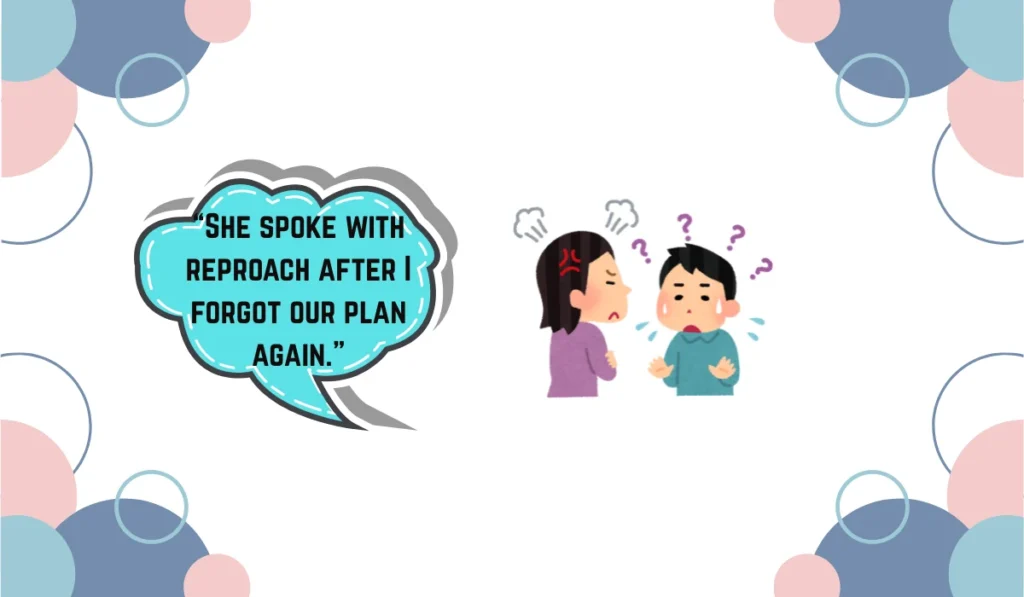
- “She spoke with reproach after I forgot our plan again.”
- “His eyes held reproach, but he didn’t say a word.”
3. Casual Social Media Comment
- “No reproach, but you really need to update your profile 😅”
4. Work or Formal Chat
- “The manager’s message carried a tone of reproach regarding the missed deadline.”
📱 Where You’ll Commonly See It:
- WhatsApp conversations
- Instagram captions or comments
- Facebook posts
- Workplace emails or Slack messages
- Storytelling on TikTok captions
Examples of “Reproach Meaning” in Conversations
Let’s make it even clearer with real-life styled chat scenarios.
🟢 Example 1: Friend Chat
A: “You didn’t come to the meetup yesterday.”
B: “Don’t start with that reproach look again 😭 I had an emergency!”
👉 Meaning: B is joking about feeling judged or criticized.
🟢 Example 2: Relationship Chat
A: “You forgot our dinner plan…”
B: “I know… I can already feel your reproach through the message.”
👉 Meaning: B senses disappointment from A.
🟢 Example 3: Family Chat
Mom: “You didn’t eat your breakfast again.”
Child: “Okay okay, stop with the reproach 😅 I’ll eat now.”
🟢 Example 4: Professional Chat
Manager: “The report was due yesterday.”
Employee: “Understood, I see the reproach in your message. I’ll fix it immediately.”
These examples show how reproach meaning often carries emotional weight, even when no direct anger is expressed.
Common Mistakes or Misunderstandings
Many learners and even native speakers misunderstand how reproach works in communication. Let’s clear that up.
❌ Mistake 1: Thinking It Means Only Anger
Reproach is NOT the same as anger.
- Anger = strong emotional reaction
- Reproach = disappointment or mild criticism
👉 Example:
- Wrong: “He shouted in reproach.”
- Correct: “He looked at me with reproach.”
❌ Mistake 2: Using It as Slang or Abbreviation
Some people assume “reproach” is internet slang. It is NOT.
It is:
- A formal English word
- Not shortened or abbreviated in chats
❌ Mistake 3: Using It in Casual Short Messages Without Context
Saying just:
- “Reproach.”
In a chat feels incomplete or confusing. It needs context.
❌ Mistake 4: Confusing It with Insult or Abuse
Reproach is softer than insults. It implies emotional disappointment, not verbal attack.
Related Slangs or Similar Expressions
While reproach meaning is formal, there are several modern slang or casual phrases that express similar emotions in texting culture.
💡 Similar Expressions:
- “Giving side-eye 👀”
- “Judging you rn”
- “Not impressed 😐”
- “Really? bro…”
- “I’m disappointed”
- “That hurt my feelings”
- “SMH (shaking my head)”
💬 Example Comparison:
- Formal: “She looked at him with reproach.”
- Casual: “She was literally judging him so hard 😂”
📊 Tone Differences:
| Expression | Tone |
|---|---|
| Reproach | Formal, emotional |
| SMH | Casual, internet slang |
| Side-eye | Humorous, informal |
| Disappointed | Neutral emotional |
Why Understanding “Reproach Meaning” Matters in 2026
Communication today is mostly digital, and tone is often lost in text messages. That’s why understanding emotional words like reproach is important.
✔️ You avoid misunderstandings
A simple message like “I’m disappointed” can feel very different from “I’m reproaching you.”
✔️ You improve writing skills
Whether you’re:
- Writing emails
- Posting online
- Chatting in groups
Knowing this word helps you express emotions more accurately.
✔️ You understand literature and media better
You’ll see “reproach” in:
- Books
- Movies subtitles
- Dramatic dialogues
Everyday Usage Tips (How to Use It Correctly)
If you want to use reproach meaning correctly in writing or chat, follow these tips:
✔️ Use it when:
- Describing emotions
- Writing stories or captions
- Explaining tone in conversations
✔️ Don’t use it when:
- You want casual slang tone
- You are writing very short messages
- You want humor without context
💬 Best Usage Style:
Instead of saying:
- “Reproach you”
Say:
- “She looked at me with reproach.”
- “His tone carried reproach.”
Internal Learning Suggestions (Related Topics)
If you’re interested in improving your understanding of language and texting tone, you can also explore:
- Tone in texting explained
- Passive aggressive messages meaning
- Internet slang vs formal English
- Emotional vocabulary in English chats
FAQs
1. What is the simple meaning of reproach?
It means expressing disappointment or criticism toward someone’s behavior.
2. Is reproach a slang word?
No, it is a formal English word, not slang or abbreviation.
3. How do you use reproach in a sentence?
Example: “She looked at him with reproach after the argument.”
4. Is reproach the same as anger?
No, reproach is softer and more about disappointment than anger.
5. Can I use reproach in texting?
Yes, but it sounds formal and is usually used in emotional or serious messages.
6. What is a synonym of reproach?
Words like “criticism,” “disapproval,” or “rebuke” are similar.
7. What does a reproach look like in chat?
It often appears as emotional disappointment, like: “I expected more from you…”
8. Is reproach positive or negative?
It is generally negative because it expresses disappointment.
Conclusion
Understanding reproach meaning helps you communicate emotions more clearly in both formal writing and modern digital conversations.
It is not slang, but a powerful emotional word that describes disappointment, gentle criticism, or moral disapproval.
In 2026, where texting dominates communication, knowing words like this helps you avoid misunderstandings and express yourself more precisely whether you’re chatting with friends, writing emails, or engaging on social media.
The more you understand emotional language, the better your communication becomes.