Understanding cultural appropriation meaning has become more important than ever in today’s digital world, where conversations on social media, texting, and global culture spread faster than ever before.
Whether you’ve seen it in a TikTok comment section, a Twitter/X debate, or even a casual group chat, this term often sparks confusion and sometimes controversy.
In simple terms, people use “cultural appropriation” when discussing how elements of one culture are used by another, especially when there is a power imbalance or when the original meaning is ignored.
This guide breaks down the cultural appropriation meaning in a clear, beginner-friendly, and SEO-optimized way so you can fully understand it and use it correctly in conversations, discussions, and online debates.
What Does “Cultural Appropriation Meaning” Actually Mean? (Definition & Origin)
The cultural appropriation meaning refers to the adoption, use, or borrowing of elements from one culture by members of another culture often without understanding, respect, or acknowledgment of its original significance.
🔹 Simple Definition:
Cultural appropriation happens when a dominant culture takes elements (clothing, music, symbols, hairstyles, traditions, etc.) from a minority or marginalized culture without proper context or credit.
🔹 Where the Term Comes From:
- The concept has been discussed in sociology and anthropology for decades.
- It became widely popular in online discourse in the 2010s.
- Today, it is frequently used in social media debates, especially around fashion, music, and pop culture.
🔹 Key Idea Behind It:
It’s not just “using something from another culture.” The focus is on:
- Power imbalance
- Lack of respect or understanding
- Commercial or trendy use without acknowledgment
💡 Example: Wearing traditional cultural attire as a fashion trend without knowing its meaning may be seen as cultural appropriation.
Why People Talk About Cultural Appropriation in 2026
In 2026, discussions around cultural identity, diversity, and online influence are stronger than ever. Social platforms amplify cultural exchanges—but also misunderstandings.
People bring up cultural appropriation meaning when they notice:
- Influencers using cultural symbols for aesthetics only
- Fashion brands copying traditional designs without credit
- Music or art being reused without acknowledging origin
- Viral trends stripping cultural meaning for entertainment
In texting and chat culture, you might see it used like:
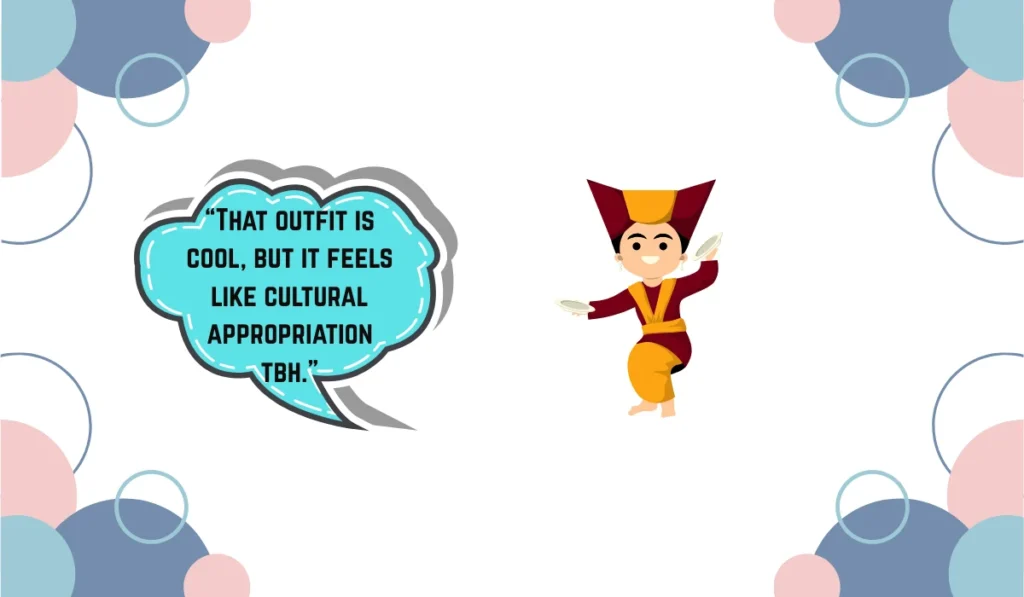
“That outfit is cool, but it feels like cultural appropriation tbh.”
Or in a more casual group chat:
“Wait… isn’t that cultural appropriation??”
How to Use “Cultural Appropriation” in Texts or Chat
Even though it’s not slang or an abbreviation, the phrase is widely used in digital communication. Knowing how to use it correctly helps you avoid misunderstandings in discussions.
🔹 Proper Ways to Use It:
- When discussing cultural sensitivity
- When analyzing trends or media
- When asking respectful questions
🔹 Example Chat Usage:
Friend 1:
“Do you think wearing traditional kimono at a party is okay?”
Friend 2:
“It depends. Some people might see it as cultural appreciation, others might say cultural appropriation.”
🔹 Social Media Example:
- “This music video is amazing, but people are debating if it crosses into cultural appropriation.”
🔹 When It’s Used Seriously:
- Academic discussions
- News commentary
- Activism-related conversations
Examples of Cultural Appropriation Meaning in Real Life
To fully understand the cultural appropriation meaning, let’s look at real-world scenarios.
🔸 Example 1: Fashion Industry
A global fashion brand uses Indigenous patterns on clothing without crediting or involving the original community.
🔸 Example 2: Hairstyles
Non-Black celebrities wearing hairstyles like cornrows or dreadlocks and calling them “new trends” without acknowledging cultural history.
🔸 Example 3: Music & Art
Artists using traditional instruments or styles in songs without mentioning their origin or cultural significance.
🔸 Example 4: Festivals & Traditions
People wearing sacred religious symbols as fashion accessories without understanding their meaning.
Common Mistakes or Misunderstandings
Many people misunderstand the cultural appropriation meaning, leading to confusion or online arguments.
❌ Mistake 1: Thinking Everything Is Cultural Appropriation
Not all cultural exchange is appropriation. Sharing and learning cultures is normal and healthy.
❌ Mistake 2: Ignoring Intent vs Impact
Even if someone doesn’t intend harm, the impact can still be important.
❌ Mistake 3: Mixing Appreciation with Appropriation
- Appreciation = learning, respecting, and crediting culture
- Appropriation = using without understanding or respect
❌ Mistake 4: Overusing the Term Online
Sometimes people use it incorrectly in arguments, which weakens meaningful discussions.
Cultural Appropriation vs Cultural Appreciation
This is one of the most important distinctions.
🌍 Cultural Appreciation:
- Learning about another culture
- Giving credit and respect
- Supporting cultural creators
- Understanding meaning and history
⚠️ Cultural Appropriation:
- Using cultural elements as a trend
- Ignoring historical or cultural context
- Profiting without acknowledgment
- Misrepresenting traditions
💡 Think of it like this:
Appreciation = respect + learning
Appropriation = borrowing without understanding
Related Slang, Terms, and Online Variations
While cultural appropriation meaning is not slang, it often appears with related internet expressions:
🔹 Common Related Terms:
- Cultural appreciation
- Cultural exchange
- Identity politics
- Representation
- Cultural sensitivity
🔹 Chat & Social Media Variations:
- “That’s kinda appropriation…”
- “Feels problematic culturally”
- “This is cultural debate material”
- “Respect the culture pls”
Why Understanding This Term Matters Online
In modern digital culture, misunderstandings can spread fast. Knowing the cultural appropriation meaning helps you:
- Communicate more respectfully online
- Understand social media debates better
- Avoid unnecessary conflicts in group chats
- Engage in thoughtful discussions
It also helps you recognize when a conversation is about respect, identity, or cultural history not just opinions.
Internal Topic Ideas for Further Reading (SEO Suggestions)
If you’re building a blog or content hub, you can link this article to:
- Internet slang meaning guide
- Social media slang explained
- TikTok trending words 2026
- Cultural appreciation vs appropriation explained
- Modern communication terms glossary
FAQs
1. What is the simple meaning of cultural appropriation?
It means using elements of one culture by another, often without respect or understanding of its original meaning.
2. Is cultural appropriation always offensive?
Not always. It depends on context, intent, and how the culture is represented.
3. What is the difference between cultural appreciation and appropriation?
Appreciation involves respect and learning, while appropriation often involves misuse or lack of credit.
4. Why is cultural appropriation controversial?
Because it often involves power imbalances and can lead to misrepresentation or disrespect of cultures.
5. Can cultural exchange be positive?
Yes. When done respectfully, cultural exchange can promote understanding and diversity.
6. Where is the term “cultural appropriation” commonly used?
It is widely used on social media platforms, academic discussions, and news commentary.
7. How do I know if something is cultural appropriation?
Ask yourself: Am I respecting the culture, understanding its meaning, and giving proper credit?
8. Is cultural appropriation a new concept?
No, but it became more widely discussed online in recent years due to social media.
Conclusion
The cultural appropriation meaning goes far beyond a viral internet phrase.
It reflects deeper discussions about respect, identity, and cultural understanding in a globalized world.
In 2026, as online communication continues to grow, this term remains highly relevant in social media debates, academic discussions, and everyday conversations.
Understanding it helps you navigate conversations more thoughtfully and avoid misinterpretations when engaging with different cultures online or offline.
👉 Share your favorite text abbreviation or internet term in the comments and keep the learning going!