Have you ever seen someone reply with “curiosity killed the cat” in a text message, TikTok comment, meme, or group chat and wondered what they actually meant? You’re not alone.
This popular saying still appears everywhere online, especially when people get a little too nosy in conversations.
In modern texting culture, phrases like “curiosity killed the cat” are often used humorously, sarcastically, or as a playful warning.
Understanding expressions like this can help you avoid misunderstandings and keep up with internet slang trends.
Whether you’re chatting on Snapchat, Instagram, Discord, Reddit, or WhatsApp, knowing the meaning behind this phrase makes online communication easier and more fun.
Updated for 2026, this guide explains the full meaning, origin, examples, and modern usage of curiosity killed the cat meaning in simple language.
What Does “Curiosity Killed the Cat” Mean?
The phrase “curiosity killed the cat” means that being too curious or asking too many questions can sometimes lead to trouble, embarrassment, or unwanted consequences.
People usually say it when someone is:
- Being nosy
- Asking personal questions
- Digging too deeply into something
- Snooping around
- Trying to uncover secrets
Simple Definition
Curiosity killed the cat = Being overly curious can get you into trouble.
It’s often used jokingly rather than seriously in modern conversations.
Origin of “Curiosity Killed the Cat”
The phrase dates back hundreds of years and originally appeared in older English sayings. Interestingly, the earliest version was slightly different:
“Care killed the cat.”
Over time, “care” was replaced with “curiosity,” and the phrase evolved into the modern version we know today.
Cats are naturally curious animals, so the saying became popular because it paints a funny image of a cat getting into trouble by exploring too much.
The Lesser-Known Full Phrase
Some people also add:
“Curiosity killed the cat, but satisfaction brought it back.”
This second part softens the warning and suggests that curiosity can still be rewarding in the end.
Today, most people only use the shorter version online.
How “Curiosity Killed the Cat” Is Used in Texting
In texting and internet culture, the phrase is usually used in one of three ways:
1. Playful Warning
Someone asks too many questions, and another person jokingly responds:
“Careful… curiosity killed the cat 😂”
This means:
“Stop being so nosy.”
2. Teasing a Friend
Friends often use the phrase humorously during gossip or secret discussions.
Example:
Friend 1: “Who were you texting last night?”
Friend 2: “Curiosity killed the cat 👀”
This creates mystery while keeping the conversation playful.
3. Meme or Social Media Caption
The phrase is popular in memes and TikTok captions where someone investigates drama and regrets it afterward.
Example:
“Me checking my ex’s profile at 2 AM… curiosity killed the cat.”
Relatable? Absolutely.
Curiosity Killed the Cat Meaning in Online Chat Culture
The phrase has adapted well to modern internet slang because it perfectly fits online behavior.
People today are naturally curious about:
- Relationship drama
- Celebrity gossip
- Private messages
- Social media stalking
- Viral rumors
- Hidden comments
- “Tea” or gossip culture
That’s why the saying still feels relevant in 2026.
Common Platforms Where It Appears
You’ll frequently see curiosity killed the cat meaning used on:
- TikTok
- Snapchat
- Discord
- X (Twitter)
- YouTube comments
- WhatsApp group chats
How to Use “Curiosity Killed the Cat” Correctly
If you want to sound natural online, use the phrase casually and conversationally.
Correct Usage Examples
Example 1
Person: “What happened between you two?”
Reply: “Curiosity killed the cat 😏”
Meaning:
“I’m not telling you.”
Example 2
Friend: “I opened the email even though I knew I shouldn’t.”
Reply: “Well… curiosity killed the cat 😂”
Meaning:
“Your curiosity got you into trouble.”
Example 3
Caption:
“When you read old messages and ruin your whole mood. Curiosity killed the cat.”
This is a relatable internet-style use.
Examples of “Curiosity Killed the Cat” in Conversations
Here are realistic examples you might actually see online.
Text Conversation Example 1
Alex: “Why were you laughing during class?”
Mia: “Don’t worry about it.”
Alex: “Tell meeee.”
Mia: “Curiosity killed the cat 😂”
Snapchat Example
User: “I accidentally checked his following list.”
Friend: “And?”
User: “Now I regret everything.”
Friend: “Curiosity killed the cat 💀”
TikTok Comment Example
“Me reading comments even after the spoiler warning. Curiosity killed the cat.”
Funny Relationship Example
Girlfriend: “Who’s Jessica?”
Boyfriend: “Curiosity killed the cat…”
Girlfriend: “And your survival instincts disappeared too.”
That last reply is classic internet humor.
Common Misunderstandings About the Phrase
A lot of people misunderstand what this saying actually means.
Mistake #1: Thinking It Literally Refers to Cats
It’s completely metaphorical. Nobody is talking about real cats.
Mistake #2: Using It in Serious Situations
The phrase is usually lighthearted online. Using it during serious emotional conversations can sound rude or dismissive.
Bad Example:
Someone shares personal trauma and another person says:
“Curiosity killed the cat.”
That would feel insensitive.
Mistake #3: Using It to Avoid Every Question
If overused, it can make you sound defensive or secretive.
Sometimes people genuinely just want information.
Why the Phrase Became Popular Again Online
Internet culture loves dramatic, sarcastic, and meme-worthy expressions. This phrase checks all the boxes.
Reasons It Trends Online
- Easy to remember
- Funny and dramatic
- Perfect for gossip culture
- Works well in memes
- Relatable for social media stalking
- Sounds mysterious
Short expressions that create emotion tend to spread quickly online.
Curiosity Killed the Cat Meaning in Memes
Memes gave this phrase a huge comeback.
Typical Meme Format
Top Text:
“Me opening the comments even though everyone said don’t.”
Bottom Text:
“Curiosity killed the cat.”
The humor comes from people knowingly making bad decisions because they’re curious.
Emotional Tone Behind the Phrase
Depending on context, the phrase can sound:
- Funny
- Sarcastic
- Mysterious
- Teasing
- Dramatic
- Flirty
- Slightly passive-aggressive
Tone matters a lot in texting.
Emojis Often Used With It
People commonly pair it with:
- 👀
- 😂
- 😏
- 💀
- 🤨
- 😭
These emojis help show whether the phrase is playful or serious.
Related Slangs and Expressions
If you’re learning online slang, these phrases are closely related to curiosity killed the cat meaning.
1. “Mind your business”
A more direct way of telling someone to stop asking questions.
2. “Spill the tea”
Means:
“Tell the gossip.”
Very popular on TikTok and Twitter.
3. “Nosy”
Describes someone overly interested in other people’s business.
Example:
“Why are you so nosy?”
4. “I need the lore”
Popular Gen Z phrase meaning:
“I need the full backstory or drama.”
5. “Down the rabbit hole”
Means becoming deeply obsessed with researching something online.
Example:
“I went down a rabbit hole reading conspiracy theories.”
When NOT to Use “Curiosity Killed the Cat”
There are situations where the phrase may not fit.
Avoid Using It:
- In professional emails
- During serious arguments
- In formal communication
- When someone genuinely needs help
- In sensitive emotional conversations
It works best in casual internet communication.
Is “Curiosity Killed the Cat” Offensive?
Usually no. Most people see it as harmless humor.
However, tone matters.
It Can Feel Rude If:
- Said aggressively
- Used repeatedly
- Used to mock someone
- Used during emotional moments
Online tone is tricky because text lacks facial expressions and voice.
That’s why emojis and context matter so much.
Modern Variations of the Phrase
Internet users love remixing classic sayings.
Popular Variations
- “Curiosity killed the cat, and I’m the cat.”
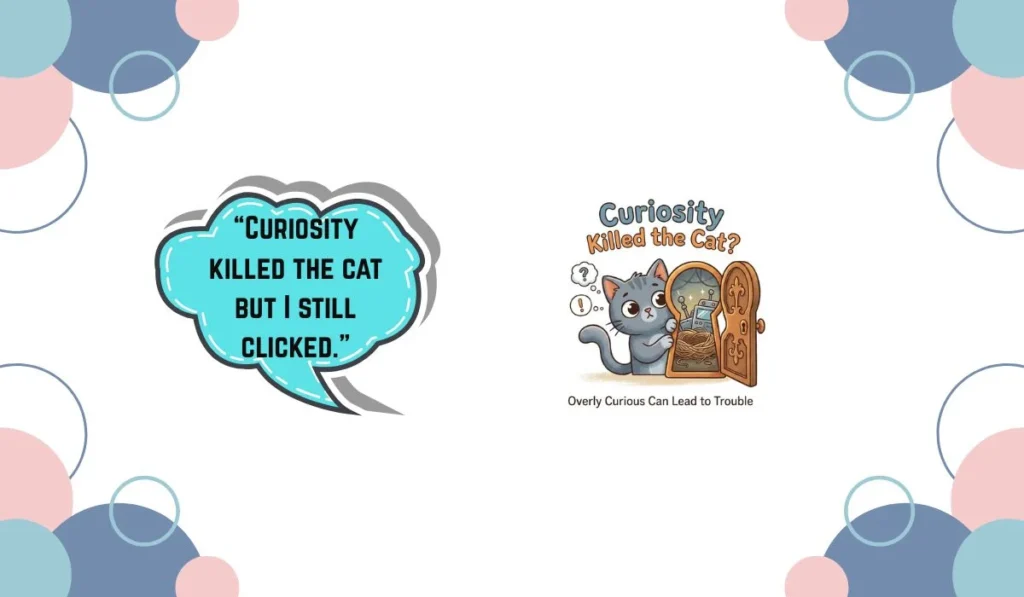
- “Curiosity killed the cat but I still clicked.”
- “Curiosity killed the cat and destroyed my mental health.”
- “Curiosity didn’t kill me but it ruined my day.”
These versions appear often in memes and viral posts.
Why Gen Z and Gen Alpha Still Use It
Even though the phrase is old, younger internet users keep it alive because it fits modern online habits perfectly.
Think about how often people:
- Check exes’ profiles
- Read toxic comment sections
- Search drama online
- Open suspicious messages
- Investigate rumors
The phrase feels timeless because human curiosity never disappears.
SEO Tip: Why People Search “Curiosity Killed the Cat Meaning”
Many users search this phrase because they saw it:
- In a text
- In a meme
- On TikTok
- In YouTube comments
- During online arguments
- In gaming chats
- On social media captions
The meaning isn’t always obvious to younger users or non-native English speakers, which keeps search interest high.
Internal Linking Suggestions
If you run a slang or texting meanings blog, you could internally link this article to:
- “Spill the Tea Meaning”
- “What Does Nosy Mean?”
- “Down the Rabbit Hole Meaning”
- “Bet Meaning in Text”
- “No Cap Meaning”
- “Sus Meaning Explained”
- “Ghosting Meaning”
These related slang terms help improve topical SEO authority.
FAQs
1. What does curiosity killed the cat mean in texting?
It means someone is being too curious or nosy and may get themselves into trouble.
2. Is curiosity killed the cat rude?
Not usually. It’s often playful or sarcastic, but tone and context matter.
3. What is the full saying?
The full version is:
“Curiosity killed the cat, but satisfaction brought it back.”
4. Why do people say curiosity killed the cat online?
People use it jokingly when someone asks too many questions or investigates drama online.
5. Is curiosity killed the cat a meme?
Yes. The phrase is commonly used in memes, TikTok captions, and funny social media posts.
6. Can I use curiosity killed the cat in casual conversation?
Absolutely. It’s very common in texting, chatting, and joking with friends.
7. Does the phrase have a negative meaning?
Slightly. It warns that too much curiosity can cause problems, embarrassment, or regret.
8. What emoji goes with curiosity killed the cat?
Popular choices include:
- 👀
- 😂
- 😏
- 💀
These emojis make the tone more playful.
Conclusion
Understanding curiosity killed the cat meaning helps you better navigate modern texting, memes, and internet culture.
While the phrase originally warned against excessive curiosity, today it’s mostly used humorously in chats, captions, and online conversations.
From TikTok drama to late-night social media stalking, the saying remains incredibly relatable in 2026.
It’s one of those timeless expressions that continues evolving with internet culture while keeping its original meaning intact.
Next time someone replies with “curiosity killed the cat,” you’ll know they’re probably teasing you for being a little too curious.
Share your favorite text abbreviation or internet slang phrase in the comments!