Understanding lesion meaning is important because this word often appears in medical reports, doctor conversations, social media health posts, and even casual chats where people are describing skin problems or injuries.
Many people also get confused when they see it online and think it might be slang or a texting abbreviation but it’s actually a real medical term, not internet slang.
In 2026, with health content spreading across TikTok, Instagram, WhatsApp, and medical forums, the word
“lesion”
is more commonly searched than ever.
This guide breaks it down in a simple, human way so you never misunderstand it again.
🧬 What Does Lesion Meaning Actually Mean? (Definition & Origin)
The word lesion refers to any abnormal change or damage in the body’s tissue. It can appear on the skin, inside organs, or anywhere in the body.
📌 Simple Definition:
A lesion is:
- A wound
- A sore
- A cut
- A damaged area of tissue
- Or any abnormal growth or change in the body
🧾 Medical Origin:
The term comes from Latin “laesio” meaning injury or damage. Doctors have used it for centuries in medical science to describe anything that looks abnormal in body tissue.
🧠 Easy Way to Understand:
If your body is like a “clean surface,” a lesion is basically:
- A scratch on that surface
- A mark that wasn’t there before
- Or a damaged spot that needs attention
So when someone says “skin lesion,” they simply mean an unusual spot or mark on the skin.
📱 Is “Lesion” Used in Texting or Chat?
Unlike slang words such as “LOL” or “BRB,” lesion is NOT a texting abbreviation or internet slang.
However, it does appear in chats in specific situations:
💬 Where You Might See It in Messages:
- Talking about health issues
- Sharing medical reports
- Describing skin problems
- Discussing doctor visits
- Health advice groups on WhatsApp or Facebook
🧠 Example of Modern 2026 Usage:
People often send messages like:
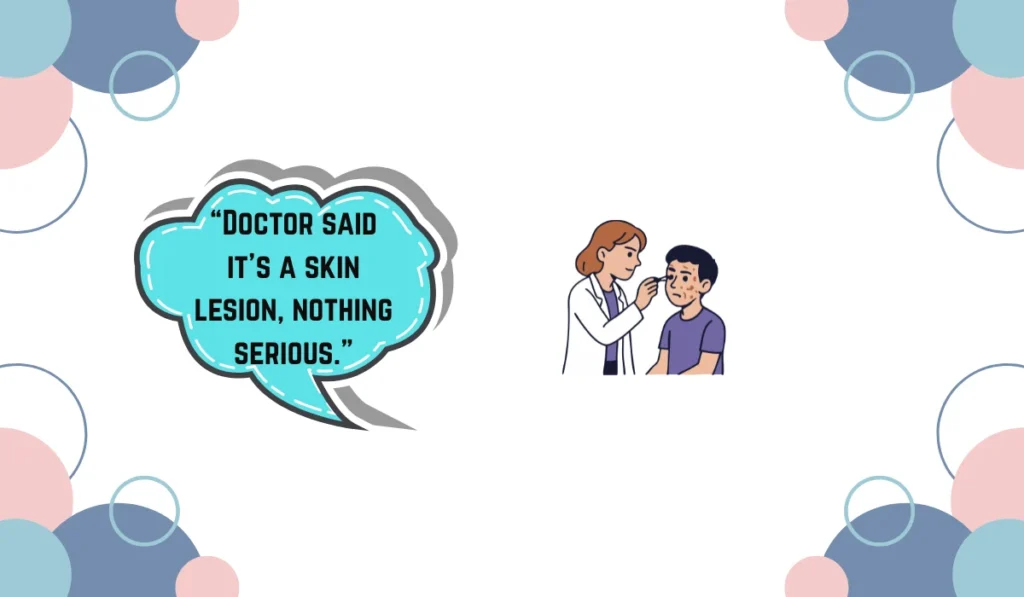
- “Doctor said it’s a skin lesion, nothing serious.”
- “I saw a lesion on my arm, should I worry?”
- “MRI shows a small brain lesion (waiting for report).”
So while it’s not slang, it’s still very common in digital communication.
💬 Examples of “Lesion Meaning” in Conversations
To make it super clear, here are real-life style examples of how the word is used in chat or conversation:
👩⚕️ Example 1: Doctor Chat
Patient: “What is this mark on my skin?”
Doctor: “It looks like a benign lesion, nothing dangerous.”
👨👩👧 Example 2: Family Chat
Mom: “Is that rash getting worse?”
Son: “No, doctor said it’s just a minor skin lesion.”
📲 Example 3: Online Health Forum
User1: “I found a lesion on my scalp, anyone experienced this?”
User2: “Yes, I had a similar lesion, turned out to be harmless.”
😂 Example 4: Misunderstanding Case
Friend: “Bro I have a lesion 😭”
Other friend: “What slang is that?”
Reality: It’s not slang it just means a medical spot or injury.
⚠️ Common Mistakes or Misunderstandings
Because the word sounds technical, many people misunderstand lesion meaning.
❌ Mistake 1: Thinking It’s Slang
Some users think “lesion” is:
- Internet slang
- A gaming term
- Or an abbreviation
👉 Truth: It is a medical term only
❌ Mistake 2: Assuming It Means Cancer
Not every lesion is dangerous. People often panic unnecessarily.
👉 Reality:
- Some lesions are harmless
- Some need medical attention
- Only a doctor can diagnose it properly
❌ Mistake 3: Self-Diagnosing From Google
Many users search “lesion meaning” and assume worst-case scenarios.
👉 Important reminder:
Online definitions are helpful, but not a medical diagnosis.
🧾 Types of Lesions (Simple Breakdown)
Understanding lesion meaning becomes easier when you know its types:
🟢 1. Skin Lesions
- Acne
- Rashes
- Burns
- Cuts
🔵 2. Internal Lesions
- Found in organs like brain, liver, lungs
- Detected through scans (MRI, CT)
🟠 3. Benign Lesions
- Non-cancerous
- Usually harmless
🔴 4. Malignant Lesions
- Can be cancer-related
- Require medical treatment
🔗 Related Words & Medical Terms
If you are learning lesion meaning, these related terms will also help:
📚 Similar Words:
- Wound
- Sore
- Ulcer
- Rash
- Tumor
- Infection
- Growth
🧠 Related Medical Terms:
- Dermatology (skin science)
- Pathology (study of disease)
- MRI scan
- CT scan
🌐 Where You See “Lesion” Most Often in 2026
In today’s digital world, the term appears in many places:
📱 Social Media:
- Health TikTok videos
- Instagram medical pages
- Reddit health discussions
💬 Messaging Apps:
- WhatsApp doctor consultations
- Family health updates
- School/college medical reports shared in groups
🏥 Medical Reports:
- MRI results
- Blood test summaries
- Dermatology checkups
🧠 Why People Search “Lesion Meaning”
Search trends in 2026 show people usually look it up because:
- They saw it in a medical report
- A doctor mentioned it
- Someone posted about it online
- They are confused by the term
- They fear it might be serious
Understanding it removes unnecessary stress and confusion.
📌 Quick Internal Learning Suggestions
If you’re interested in similar topics, you might also explore:
- “rash meaning in medical terms”
- “tumor vs lesion difference”
- “skin infection types explained”
- “medical terms explained simply”
❓ FAQs
1. What is the simple meaning of lesion?
A lesion is any abnormal change or damage in body tissue, like a cut, sore, or mark.
2. Is lesion a serious condition?
Not always. Some lesions are harmless, while others may require medical attention.
3. Is lesion a slang word in texting?
No, lesion is not slang. It is a medical term used in healthcare.
4. Can a lesion heal on its own?
Yes, many minor skin lesions heal naturally without treatment.
5. What causes lesions on the skin?
They can be caused by acne, infections, injuries, burns, or allergies.
6. Are all lesions cancerous?
No. Most lesions are non-cancerous (benign), but some require medical evaluation.
7. Where do doctors usually find lesions?
Lesions can be found on the skin or inside organs like the brain, lungs, or liver.
8. Should I worry if I hear the word lesion?
Not immediately. You should wait for a doctor’s diagnosis before worrying.
🧾 Conclusion
The lesion meaning is simple once you break it down: it refers to any abnormal or damaged area in the body, especially in medical terms.
It is not slang, not an internet abbreviation, and not a casual texting word.
Instead, it is a scientific term used by doctors worldwide.
In 2026, as health awareness grows online, more people encounter this word in messages, reports, and social media posts. Understanding it correctly helps avoid confusion and unnecessary fear.
If you found this guide helpful, share your favorite confusing word or text abbreviation you might help someone else understand it too!