If you’ve ever been in a group chat, scrolling through comments on social media, or reading someone’s reply that felt a little too clever for comfort, you’ve probably come across the word “snarky”.
But what does it actually mean when someone says a message is snarky or calls a person snarky?
Understanding the snarky meaning is important in modern texting and online communication because tone is everything.
A message that looks funny to one person can feel rude or sarcastic to another.
In today’s fast-paced digital world (especially in 2026, where short-form communication dominates), “snarky” is a term you’ll see more than ever in comments, DMs, memes, and even workplace chats.
This guide breaks everything down in simple, human language so you can confidently recognize, use, and respond to snarky comments without confusion.
What Does “Snarky” Mean? (Definition & Origin)
The snarky meaning refers to a tone of speech or writing that is slightly rude, sarcastic, or sharply witty in a mocking way.
In simple terms:
A snarky comment is a clever but slightly mean or sarcastic remark.
It’s not always full-on insulting. Instead, it sits in a “gray area” between humor and rudeness. That’s what makes it tricky and interesting.
Core characteristics of snarky language:
- Sarcasm disguised as humor
- Slightly rude or biting tone
- Clever or witty wording
- Passive-aggressive undertones
- Often used to criticize or tease
Where did “snarky” come from?
The word “snark” has roots in early English slang, often linked to sharp, sarcastic remarks. Over time, “snarky” became widely used in American English to describe someone who responds with witty but cutting comments.
By the 2000s, internet culture adopted it heavily especially in forums, memes, and social media commentary. In 2026, it’s a mainstream digital slang term used globally in texting culture.
How to Use “Snarky” in Texts or Chat
Using the word snarky correctly depends on context. It can describe:
- A person’s personality
- A specific message or reply
- The tone of a conversation
Common ways people use it:
1. Describing someone’s behavior
- “She’s being so snarky today.”
- “Don’t get snarky with me.”
2. Describing a message or comment
- “That was a snarky reply.”
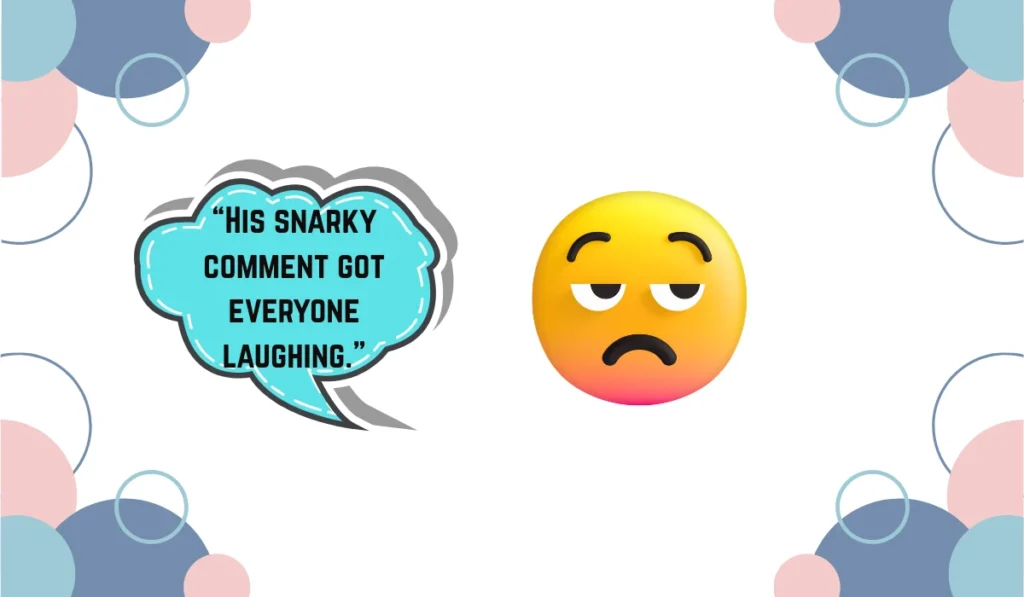
- “His snarky comment got everyone laughing.”
3. Light teasing in conversations
- “Okay, Mr. Snarky, calm down 😂”
Tone matters a lot
In texting, tone is everything. A snarky message can be:
- Funny among friends
- Offensive in serious conversations
- Misunderstood in professional settings
So always be careful with how and where you use it.
Examples of “Snarky” in Conversations
Let’s make this real. Here are some everyday chat examples so you can clearly understand the snarky meaning in action.
Example 1: Friend group chat
A: “I studied for 5 minutes, I think I’ll ace the exam.”
B: “Wow, Harvard is shaking already 🙄”
👉 This is snarky because it’s sarcastic and lightly mocking.
Example 2: Social media comment
Post: “Woke up at 5 AM and changed my life.”
Comment: “Yeah, that 5 AM grind really fixed everything in one day 😂”
👉 Snarky tone with humor + sarcasm.
Example 3: Text conversation
A: “I’m always right.”
B: “That must be exhausting for everyone around you.”
👉 A classic snarky comeback clever but slightly rude.
Example 4: Workplace chat (careful here!)
Colleague: “Let’s finish this task quickly.”
Reply: “Sure, because we’ve totally been sitting around doing nothing all day.”
👉 This can come off as unprofessional snark if used in formal settings.
Common Mistakes or Misunderstandings
Even though the snarky meaning sounds simple, many people misuse or misunderstand it in digital communication.
1. Confusing snarky with rude
Not every rude comment is snarky. Snarky usually includes:
- Humor
- Wit
- A playful edge
Pure insults are not snarky they’re just rude.
2. Thinking it’s always negative
Snarky comments can actually be:
- Funny
- Entertaining
- Social bonding tools among friends
It depends on context and relationship.
3. Using it in professional environments
This is where people often go wrong in 2026 digital communication. In work chats or emails, snarky tone can:
- Be misunderstood
- Appear disrespectful
- Damage credibility
4. Missing tone in text messages
Without facial expressions or voice tone, snarky messages can be misread. What you meant as funny might sound offensive.
Tip: Use emojis or clarify intent when chatting casually.
Related Slangs or Abbreviations
If you’re learning the snarky meaning, it helps to also understand related slang terms commonly used in texting culture:
1. Sarcastic
Very close to snarky, but usually more obvious and less personal.
2. Sassy
Confident, bold, sometimes cheeky can be positive or playful.
3. Savage
More intense than snarky. Often used for brutal, funny insults or comebacks.
4. Passive-aggressive
Indirect negativity, often hidden behind polite wording.
5. Witty
Smart humor without the rude edge sometimes overlaps with snarky humor.
Quick comparison:
- Snarky = sarcastic + slightly rude + witty
- Savage = direct + harsh + funny
- Sassy = bold + confident + playful
- Witty = clever + clean humor
Why “Snarky” Is So Popular in 2026 Internet Culture
In 2026, online communication is faster, shorter, and more personality-driven than ever. Platforms like TikTok comments, Instagram threads, and group chats thrive on quick humor and reactions.
Snarky comments are popular because they:
- Add humor to conversations
- Show personality quickly
- Make replies more engaging
- Fit meme culture perfectly
But at the same time, they require emotional awareness. What feels funny in one group may feel disrespectful in another.
How to Respond to a Snarky Comment
If someone sends you a snarky message, here are a few ways to respond:
1. Play along
- “Okay, I deserved that 😂”
2. Respond with humor
- “You’re too good at this, honestly.”
3. Ignore it
- Best option if it feels passive-aggressive or unnecessary
4. Set boundaries (if needed)
- “Let’s keep it respectful.”
FAQs
1. What does snarky mean in texting?
It means a sarcastic, witty, and slightly rude comment used often for humor or teasing.
2. Is snarky an insult?
Not always. It can be playful among friends, but it may sound rude depending on tone.
3. What is an example of a snarky comment?
“Wow, you’re really early… for once in your life.”
4. Is snarky the same as sarcastic?
They are similar, but snarky is usually more personal and sharper in tone.
5. Can snarky be funny?
Yes, many snarky comments are meant to be humorous.
6. Is it okay to be snarky at work?
Generally no. It can be misunderstood as unprofessional or disrespectful.
7. What is a snarky comeback?
A witty reply that lightly mocks or teases someone in response to their comment.
8. Why do people use snarky comments online?
Because they are quick, funny, and help express personality in digital conversations.
Conclusion:
The snarky meaning in modern texting culture refers to a clever, sarcastic, and slightly rude style of communication.
It sits between humor and criticism, making it both entertaining and risky depending on how it’s used.
In 2026 digital conversations whether on social media, messaging apps, or comment sections snarky remarks are everywhere.
They add personality and humor, but they also require careful use to avoid misunderstandings.
If used wisely, snarky language can make conversations more engaging and fun. If used carelessly, it can easily come across as rude or offensive.
Now it’s your turn share your favorite text abbreviation or slang in the comments and let’s decode it together!